

How To Change Theme From Template In Wordpress
If you've installed a WordPress theme but it'due south not quite right for you, you may be feeling frustrated. At that place are plenty of options bachelor to you for customizing your WordPress themes.
The claiming is finding the right style to exercise information technology.
In this post, I'll steer yous through the options for customizing your WordPress theme, help to decide which one's right for you lot and show you how to do it safely and efficiently.
Adopt to watch the video version?
Options for Customizing a Theme
Before we dive in and first making changes to your theme, it pays to understand what the options are, as they suit different situations.
Here's an overview of the options available to you:
- If you want to add functionality to your theme, install a plugin.
- Use the Customizer in your WordPress admin screens to customize fonts, colors and maybe layout also, depending on your theme.
- If you're working with a page builder theme, use its features to customize the blueprint of your site.
- If you've installed a framework theme, use one of the available kid themes to customize your site, along with any customization options viable own the admin screens.
- If your theme is specific to your site and you're comfortable doing it, edit the theme's code directly.
- If y'all want to edit the lawmaking of a tertiary-party theme, create a child theme.
If y'all want to edit the code, you have a number of options available to you, from using the block editor, to the Customizer, right through to editing the files. We'll wait at them all in this mail, but let'due south start with the simplest option: installing a plugin.
Do You Actually Need to Customize Your Theme?
Sometimes you don't demand to customize your theme at all: instead, you demand to install a plugin.
Themes dictate the design of your site: the way it looks and the way information technology displays content (use our theme detector tool to identify the underlying theme for a design you like). Plugins add extra functionality.
If the changes you lot want to brand are focused on functionality rather than blueprint, consider installing a plugin yourself. This could be a plugin you lot need to write, 1 you download from the plugin directory, or one you buy.
If you find yourself wanting to edit the functions.php file in your theme, inquire yourself:
Would I want to keep this functionality if I switched themes in the future?
If the answer is yes, that code should go in a plugin, not your theme.
Good examples of what you lot would use a plugin instead of a theme including adding widgets, registering custom mail service types and taxonomies, creating custom fields and adding extra features similar a store or SEO enhancements.
Customizing Your WordPress Theme via the WordPress Admin Screens
If the changes you want to brand are blueprint-focused and relatively simple, y'all may be able to make them via the admin screens. The Customizer gives you a variety of options for tweaking your theme: what's available to y'all will depend on your theme. And you lot may see something called the Editor in the Appearance menu. Steer clear of this, for reasons I'll describe before long.
Customizing Your Theme via the Customizer
The easiest way to customize your WordPress theme is using the WordPress Customizer.
Y'all admission this in one of two means:
- When viewing your site (when y'all are logged in), click the Customizelink in the admin bar at the top of the screen.
- In the admin screens, click on Appearance > Customize.
This takes y'all to the Customizer.
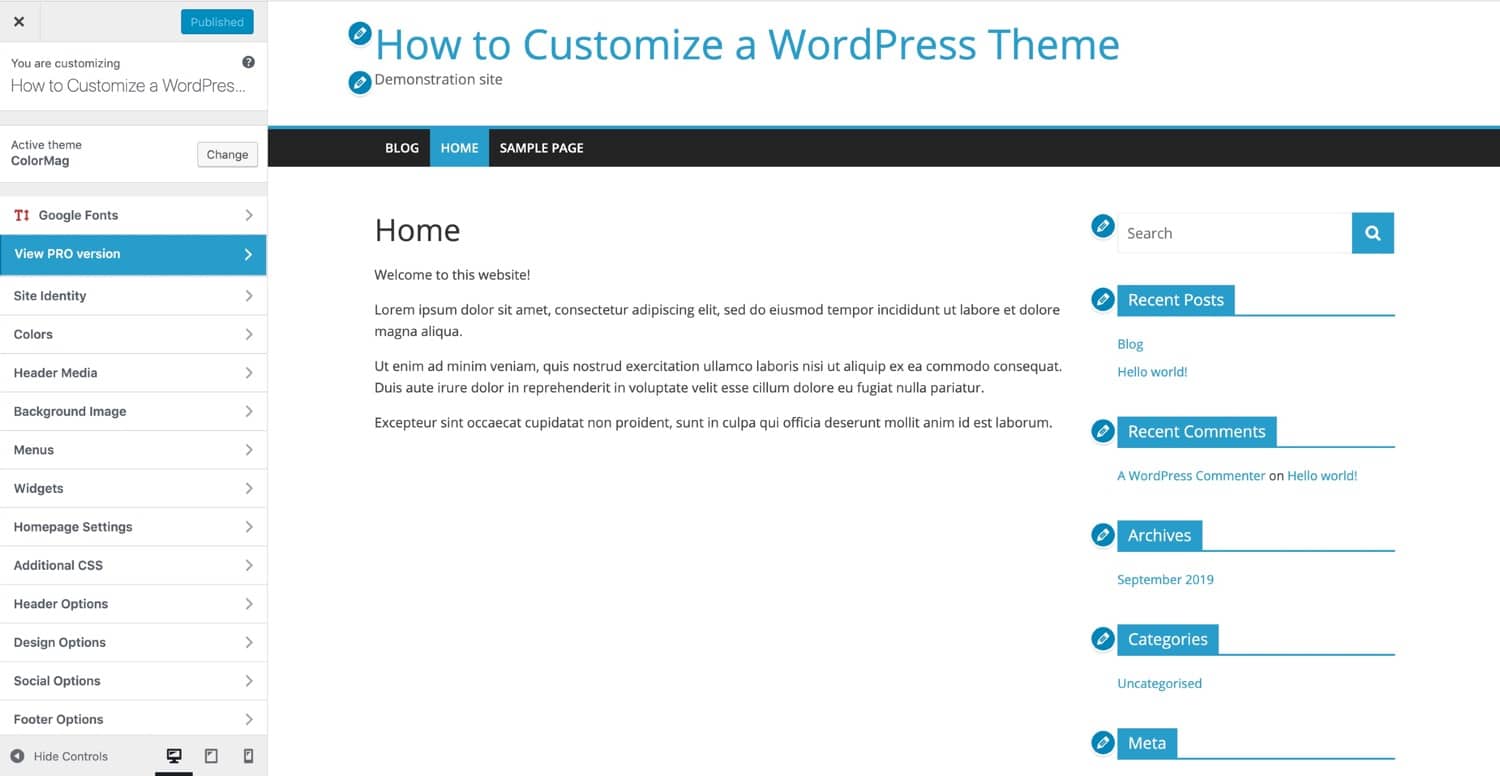
In the screenshot above, I've installed a costless theme called ColorMag which has lots of customization options. It's added sections to the Customizer for blueprint features including a header image, social media, category colors, and a Design Options tab that takes yous through to all the same more than tabs where y'all can make changes to the layout and design of your site.
Unlike themes have different customization options, but newer themes seem to be adding more and more than of them all the fourth dimension. If you discover a theme that yous like just that isn't quite correct for you, yous might detect that customizing it gives you exactly the design and layout yous demand.
The Theme Editor (and Why Not to Apply information technology)
In your admin screens, you may notice an option called the Theme Editor, which you acmes via Appearance > Theme Editor.
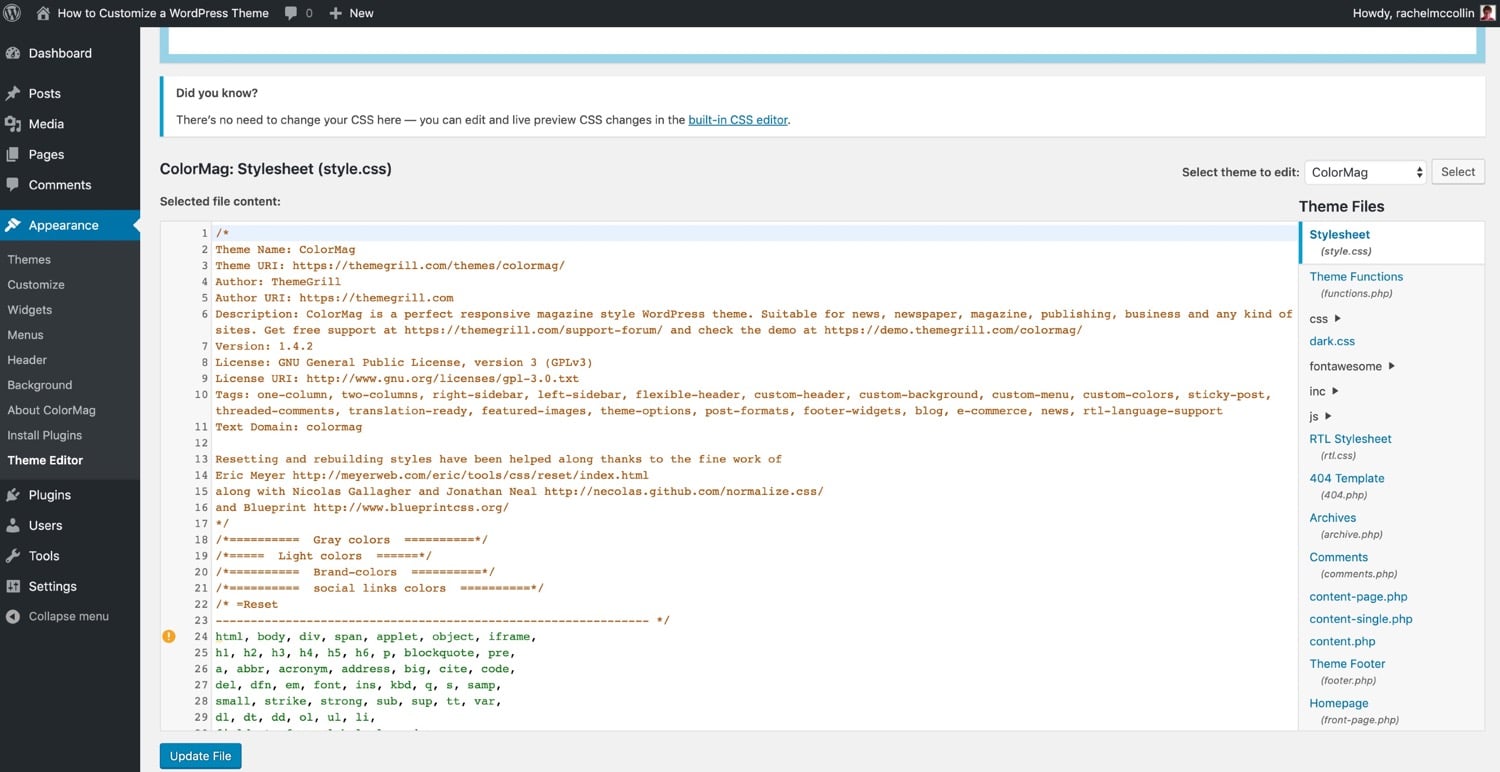
This gives y'all access to the files in your theme, meaning that you can directly edit them.
Don't.
Even if yous're comfy writing CSS or PHP, editing the files in your theme like this is a very bad thought, for two reasons:
- If you've bought or downloaded a third-party theme, whatsoever changes you brand will exist lost the next time y'all update the theme (and y'all should proceed your theme updated for security reasons).
- More than chiefly, if you make a change that breaks your site, it won't be tracked and the previous version of the file won't be changed. Y'all could irrevocably break the site.
If yous want to edit the lawmaking in your theme, yous should practise information technology using a lawmaking editor (check out the all-time free HTML editors), and you shouldn't t edit the files in your live site until you've tested it on a WordPress staging site. If you need to edit a tertiary-party theme, yous should do so via a child theme. More on both of these later in this postal service.
WordPress knows how dangerous it is to utilise the theme editor: it even gives you a alarm when you try to access information technology.
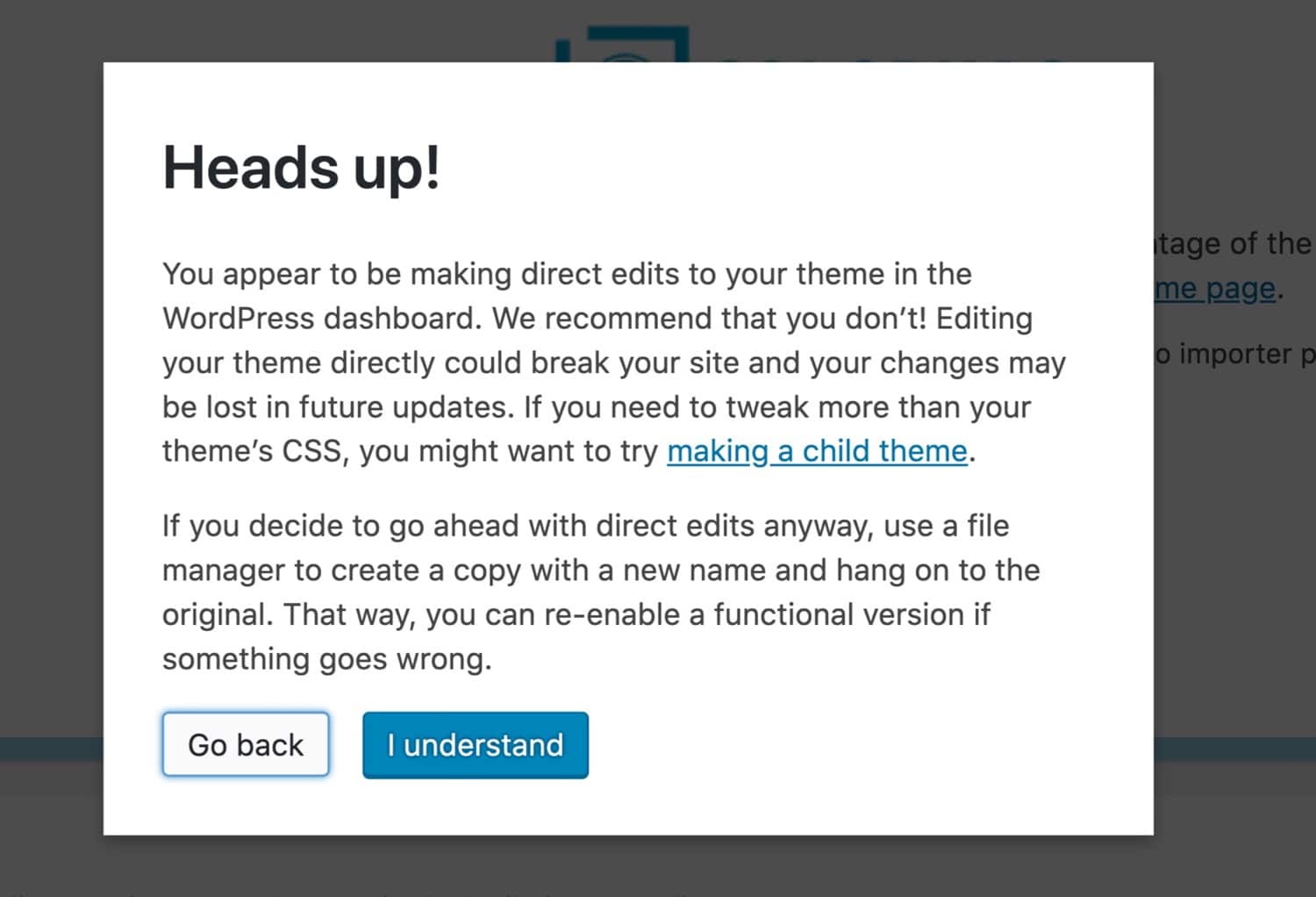
So take WordPress'south advice: don't employ the theme editor!
Using Page Builders and Frameworks to Customize Your WordPress Theme
A large proportion of WordPress themes accept customization options, meaning you can brand changes to the design and layout via the Customizer.
But some themes take this further and are designed to be extended and significantly customized. Those themes are called theme frameworks.
Another selection is to apply a plugin that lets yous blueprint your site using a user-friendly interface: those are chosen page builders.
Using a Page Architect to Customize Your Theme
Page Builder plugins are designed to get in like shooting fish in a barrel for yous to gear up the pattern of your site, using an interface that lets you run into what yous're getting.
You install a page builder plugin with a uniform theme, and and then use the options information technology gives you to design your site exactly the manner you want it.
1 of the most well-known page builders is Elementor, but you can notice out most some alternatives in our roundup of folio builders.
Folio builders permit you edit your posts and pages with a drag-and-driblet interface, significant you can see how your content will await and tin can make each page loo unique.
Beneath, I'chiliad using the Elementor page builder with the Howdy Elementor theme, which is compatible with it.
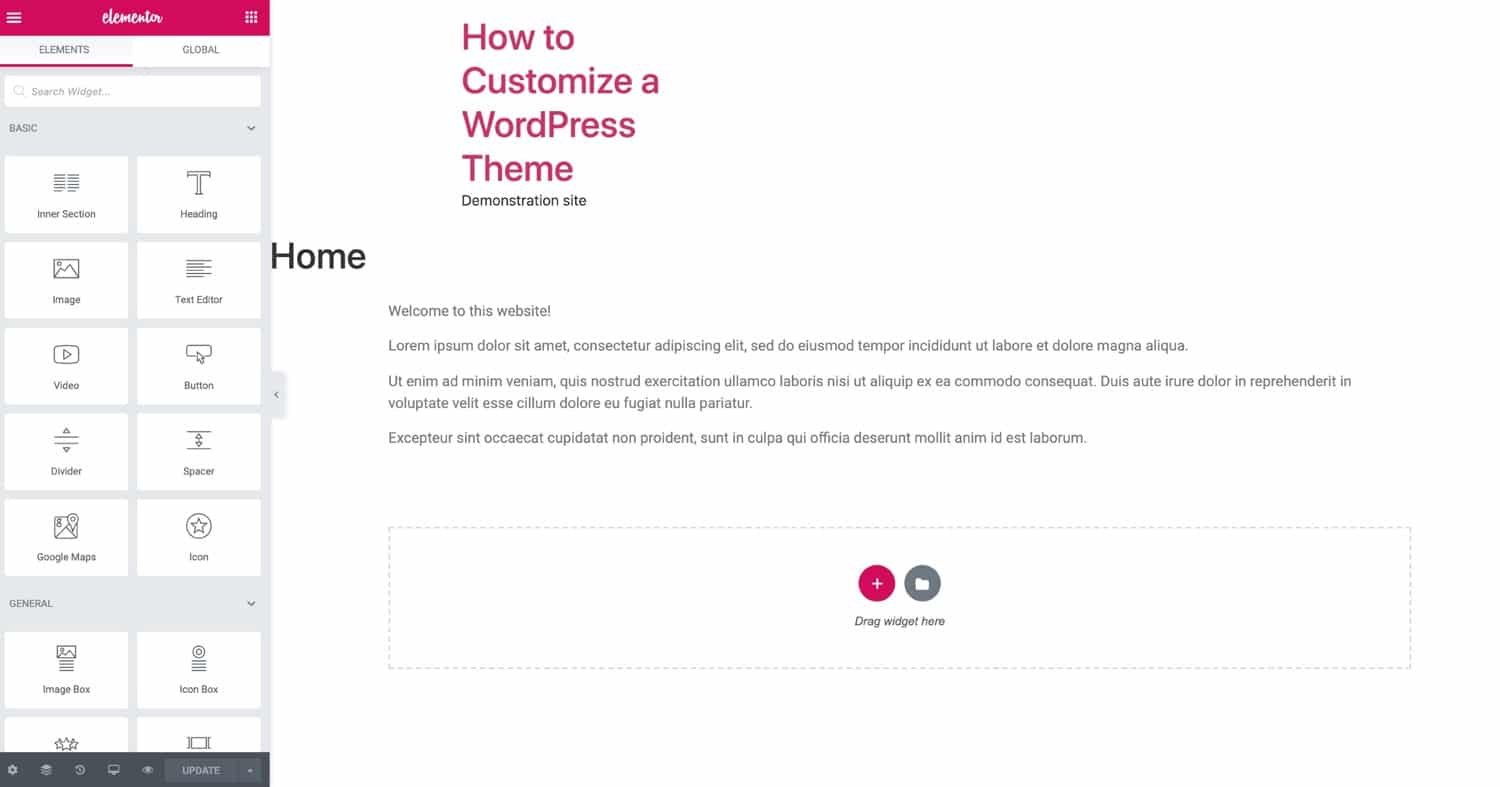
Folio builders give yous lots of flexibility with the layout and design of your pages. If yous're used to a website builder like Wix, they tin can aid ease the transition to WordPress. And if you prefer a WYSIWYG interface for your WordPress content, they tin aid y'all design your pages speedily.
Using a Theme Framework to Customize Your Theme
An alternative to page builders is theme frameworks. These are suites of themes designed to piece of work together. At that place's one parent theme which is the framework, and a choice of child themes that you can use to customize the main theme and make it look the way you want.
An example of theme frameworks is Divi, which has customization options that let you tweak the design of your child theme even farther, including a elevate and drop interface similar to those of page builders.

Recommended reading: Divi vs Elementor: WordPress Page Builder Plugins Comparing
Editing Your WordPress Theme's Code
If you're comfortable editing CSS and/or PHP, then you tin can edit the code in your theme to customize your theme.
This gives you the greatest degree of control.
If yous're editing your own theme, which is specific to your site and was adult specially for it, and then you lot can make edits to the theme direct. But if you're working with a third-party theme and want to edit that, you should create a kid theme to avert losing your changes next time you update the theme.
Editing Theme Files
The offset step to editing your WordPress theme is to empathise which theme files control what, and which you'll need to edit.
The Stylesheet
Every WordPress theme has a stylesheet, called style.css. It contains all of the code for styling your site: layout, fonts, colors, and more.
Subscribe At present
If you want to change the colors in your theme, for example, you would make edits to the stylesheet. If y'all want to add a new font, you would employ the stylesheet to apply it to different elements such as the torso text and the headings.
Pay attending when editing the stylesheet: specificity means that the code for an element isn't always coming from where you recollect it is. Elements will inherit styling from other elements that are above them in the hierarchy of the page unless you add styling which is specific to the lower chemical element.
To find what CSS is affecting which elements on the page, you can employ the inspector in your browser to view the CSS (Chrome DevTools in this example):
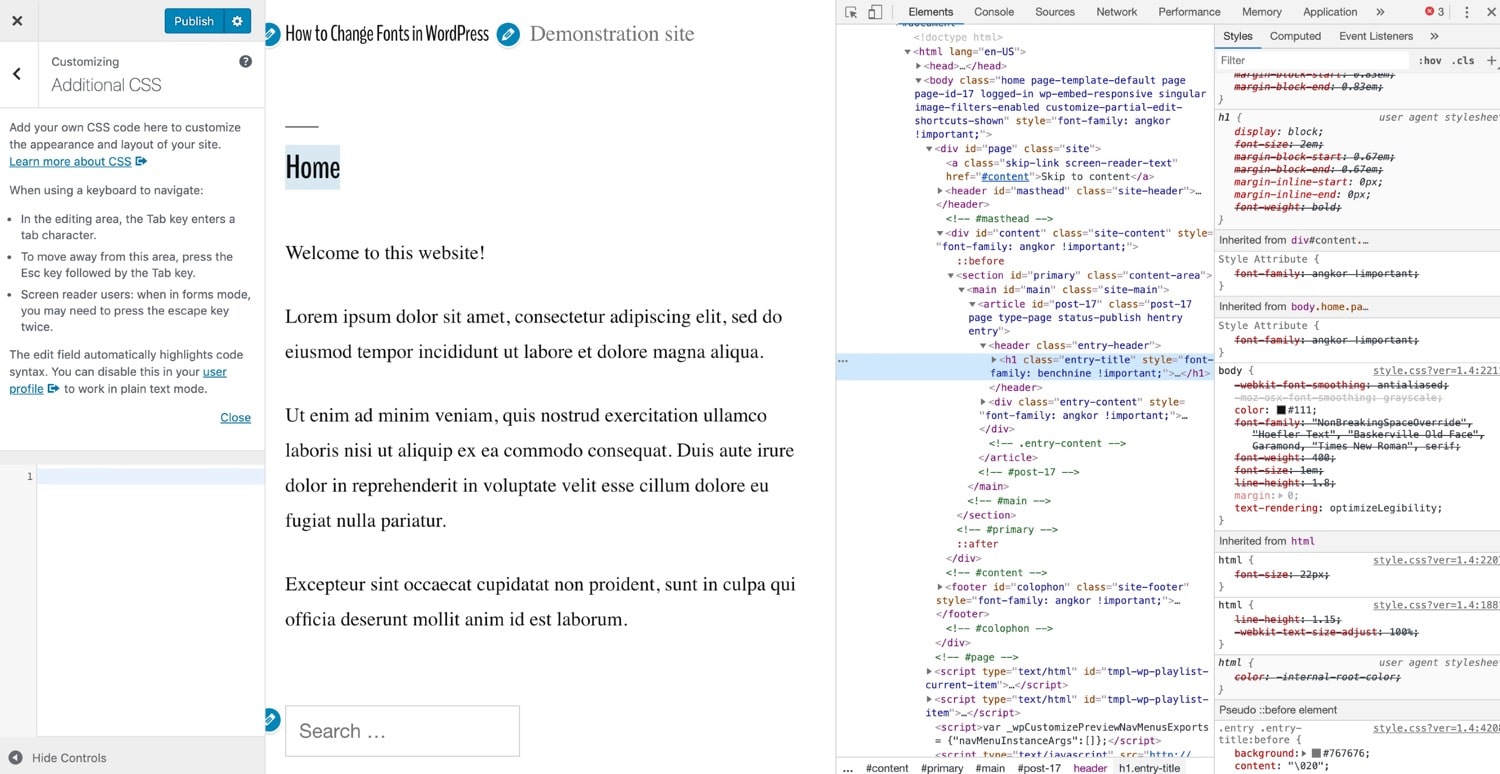
You can and so use this to write new CSS that targets individual elements or a range of elements or classes on the page.
If all this talk of elements, classes, and specificity is new to you, you may desire to steer clear of directly editing your theme's CSS. At least until you've learned more near CSS and how it works.
The Functions File
Some other file that pretty much every theme will have is the functions file (functions.php). This is the file that makes a bunch fo stuff work in your theme. Within it, y'all tin find code to register theme features similar featured images, widgets, and more.
If y'all're tempted to add functional code to your theme, this is where you'll add it. Only beware: in well-nigh cases, you should really be writing a plugin. Ask yourself:
Would I want to keep this functionality if I switched themes in the time to come?
If the reply is yes, write a plugin instead of adding code to the functions file. Plugins don't have to be big: there'south nothing to stop you from creating one for a couple of lines of code.
The functions file is all written in PHP, so yous'll need to be familiar with that. Don't blindly copy code you lot find via a Google search: accept the fourth dimension to work out what that code does and to understand it. That way you're less likely to add code that isn't every bit good as it should be.
The Theme Template Files
Most of the files in a theme are theme template files. These are files which determine what content WordPress outputs on a given page, and are chosen according to the template hierarchy.
If you want to change the way content is output on a given post blazon, page, or archive, y'all'll need to either edit one of these files or create a new i.
For example, say your theme has an archive.php file that's beingness used to output archive pages for categories and tags. You lot want to make changes to the way tags are output. So you lot create a file called "tag.php", which would be based on annal.php with your tweaks.
Over again, be careful editing the files: they could suspension your site. Always test on a local installation using a tool like DevKinsta and/or WordPress staging site first.
Whichever of these file types you need to edit, you should exercise it properly. Read the section below on best practices to discover out how to edit your code in a way that won't break your site and won't cause yous security headaches.
Customizing a Third-Party Theme With a Child Theme
If the theme you're running on your site is from a third-party and yous desire to edit the code, you'll demand to create a child theme.
This is considering if you edit the theme directly so you lot update it (which you should), you'll lose all the changes you made.
Creating a child theme consists of four steps:
- Create a new binder in wp-content/themes.
- In that folder, create a stylesheet. In that stylesheet, tell WordPress that this is a child theme of your existing theme.
- Add copies of the files you want to edit to the kid theme and edit them there.
- Actuate the kid theme in your site.
WordPress volition ever employ a file from the kid theme to output content unless there is a file higher in the hierarchy in the parent theme. If in that location are 2 versions of the same file, information technology'll employ the ane from the child theme. This means your new file in the kid theme will override the ane from the parent theme.
Best Practices for Customizing WordPress Themes
And then y'all're planning on customizing your theme. Before you go ahead and make the changes, follow these tips to ensure yous're doing it safely and that y'all won't break your site, make information technology vulnerable to attacks, or lose your lawmaking.
If Possible, Customize Without Editing Code
If you can make your customizations via the Customizer or elsewhere in the admin screens, this is safer than editing the code.
Just edit the code if y'all ware familiar with CSS (for the stylesheet) and PHP (for other theme files) and you know how to do it safely.
Utilize a Local Development Site to Make Your Changes
If you lot're editing the code in your theme or creating a child theme to brand changes, you should do the evolution piece of work on a local installation of WordPress with your theme installed and your content copied from your live site.
This style, you accept a mirror of your live site to exam your changes. Working on a local site will have no consequence on your live site and tin can be quicker.
Even if yous're using the Customizer, it tin can exist helpful to apply a local version of your site for testing every bit you tin publish your changes and examination them out without affecting the live site.
One time you've tested the changes to your theme you can upload it to your alive site or, fifty-fifty ameliorate, you tin test it on a staging site and and so push it to live.
Use Version Control
When you're making changes to your theme, you should apply version control to track your changes.
At its simplest this means irresolute the version number of the theme and keeping copies of both versions. Just if yours gong to do version control properly, yous demand to utilize a service like GitHub to track your changes.
This fashion, if a change causes problems, you can easily whorl information technology back without having to make manual edits.
Version command is even more helpful if you lot're working as part of a squad, equally yous'll be able to see what other members are doing. Make sure to read our git vs Github guide.
Use a Staging Site to Test Your Changes
If y'all have admission to a staging site (such as Kinsta's free staging that comes with all plans), testing on this before activating the new version of your theme (or the new kid theme) on your live site is the safest manner to proceed.
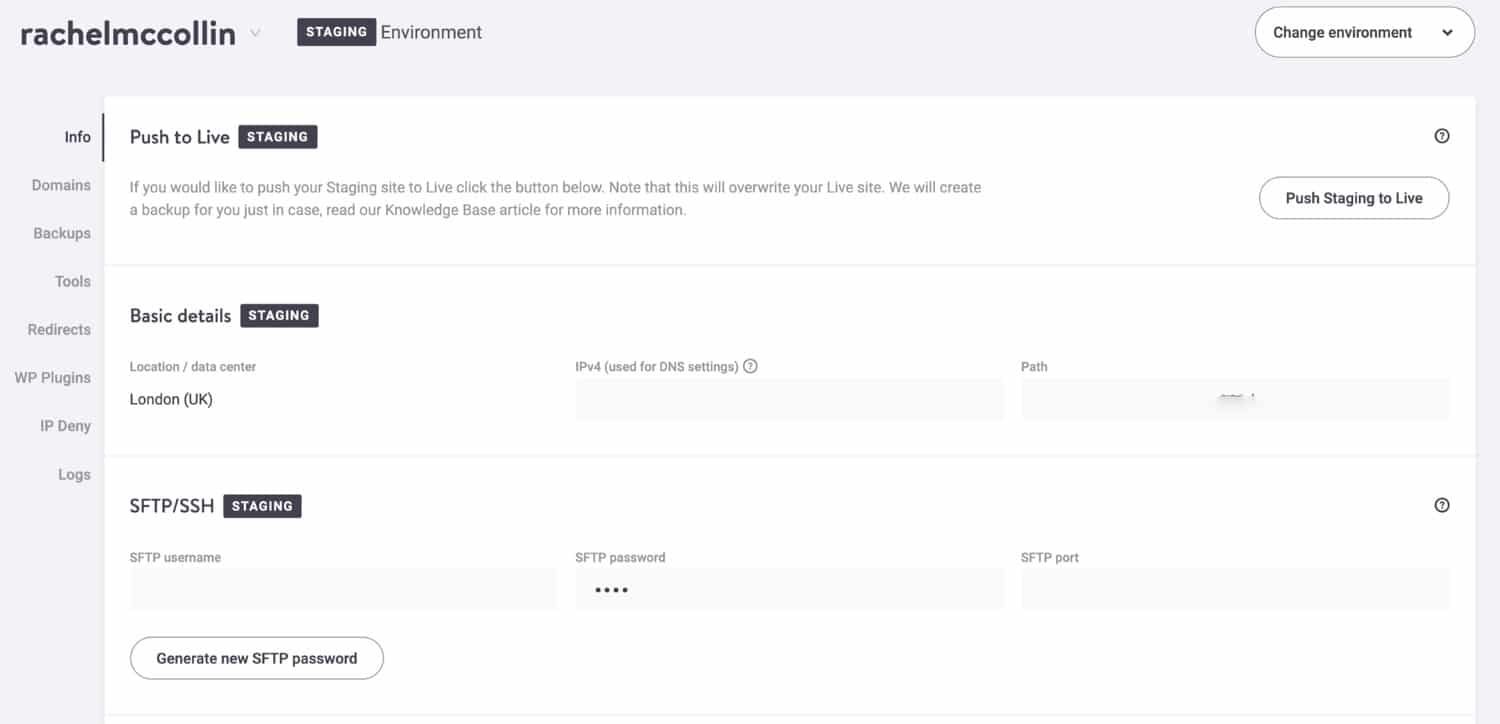
This is because any local site will have some differences from your live site: it's on a different server (one created on your local machine), it may be running a different version of PHP or any of the other tools that run your site.
Brand a copy of your live site on your staging server and then upload and activate your new theme. Test your site thoroughly to exist certain everything works, and so you tin can push your changes to your live site.
Make Your Theme Responsive
Any changes you demand to brand to your theme should work on mobile likewise as desktop.
With more and more people accessing the internet via mobile phone, and the Mobile-first index from Google, it'southward probably more important now for your theme to work on mobile than it does on desktop. So any changes you make to your theme demand to be mobile-friendly or preferably mobile-first where relevant.
This volition mainly use to any changes you brand to your styling or layout: check that the new layout works on mobile and that you've added media queries and so that the layout adjusts to different screen sizes.
If your theme isn't responsive, it'll negatively impact your search engine rankings and conversion rates.
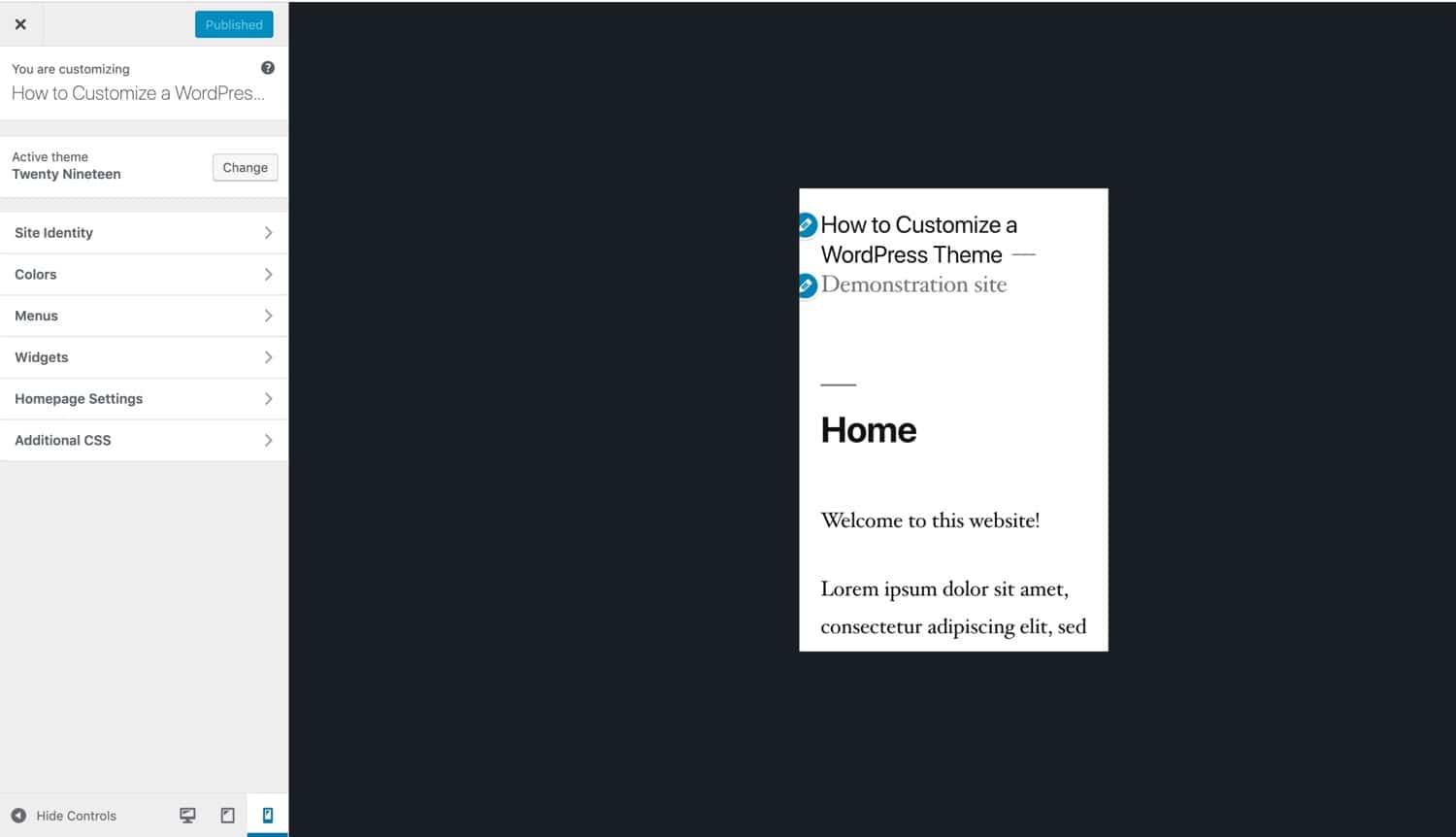
If you don't have access to lots of dissimilar mobile devices to exam on, you can use a tool like BrowserStack to run into how your site looks on dissimilar devices. You lot can also use the Developer tools in your browser and the responsive views in the Customizer.
Make Sure Your Customizations Don't Bear upon on Accessibility
Any changes to your theme besides need to be accessible for users with disabilities or sensory impairments.
This isn't just about ensuring your site works on screen readers: other considerations such as color schemes and font sizes are important for a large number of people.
If the changes you're making to your theme are to make the colors brighter or the text smaller, think over again: this might make information technology difficult for people to read or interact with your site.
Before you make any changes alive, use an accessibility checker to test your site and be sure it isn't excluding people.
Stick to the WordPress Coding Standards
If you're editing the lawmaking in your theme or creating a child theme, y'all must make certain your code is in line with the WordPress coding standards.
These standards exist to ensure consistent and quality of lawmaking and to avoid code that's a mess. In that location are standards for PHP, CSS, and JavaScript and then take some time to check those that are relevant to you lot and make sure you follow them.
If your existing WordPress theme is well-coded and you write any new code in a style that's consistent with that, you're on the way to ensuring that your code is compliant. Make sure you add comments to any changes yous brand to the theme and then that you or others know what you did when y'all come back to piece of work on the lawmaking in the future. You may think you lot won't forget merely after a few months have passed, information technology's surprisingly easy to forget why you edited a line of code.
Summary
Customizing your WordPress theme isn't all that difficult. Sometimes it's a elementary case of using the Customizer to make changes to the fonts, colors or your favicon (make sure to read our in-depth guide about WordPress fonts). Other times, you accept to create a new child theme to add a new template file to a theme.
The options yous have for customizing your theme include using a plugin or the Customizer, editing the WordPress theme'due south lawmaking directly, or creating a kid theme.
Identify the right choice for you lot and make your customizations safely, all without breaking your site.
Salvage time, costs and maximize site performance with:
- Instant assistance from WordPress hosting experts, 24/7.
- Cloudflare Enterprise integration.
- Global audience attain with 29 data centers worldwide.
- Optimization with our built-in Application Performance Monitoring.
All of that and much more, in 1 program with no long-term contracts, assisted migrations, and a 30-day-coin-back-guarantee. Cheque out our plans or talk to sales to find the program that's right for you.

How To Change Theme From Template In Wordpress,
Source: https://kinsta.com/blog/how-to-customize-wordpress-theme/
Posted by: ruthgairciand.blogspot.com
0 Response to "How To Change Theme From Template In Wordpress"
Post a Comment